This has been our second trip to Jeju, and also to South Korea in as many years – and I find myself really liking the country after just three trips over 20 years. The scenery in Jeju is varied within a fairly compact area that is just 2-3 times bigger than Singapore: it offered a mixture of oreums that we climbed, coastal trails, dramatic and rugged cliffs, cave systems, and beautifully maintained gardens.
Most folks visiting Jeju wouldn’t spend the length of time we did though. A casual observation of reviews of Jeju private drivers shows that most visitors engage them for anywhere between 1 to 3 days: we did 6! Mr. Lee, our driver, quipped that our stay of 9 days is indeed very long, and he’d at most get maybe 1 or 2 other clients each year who’d engage him for a similar duration. My sense of it is that if you’re just focused on the key and most representative places, a dense 3-day itinerary would be sufficient. If you’re doing additional sights and don’t mind them being of the same general type, then five full days. Anything more than that means you’d be taking it slow, or adding in time to just vegetate and not do much – like us!
One risk we realised during pre-planning was the unpredictable weather on the island, and we had to prepare specifically for wet weather as we’re visiting in June. As luck had it, of the 9 days we spent on the island, we saw rain that was heavy enough on 2 days to result in itinerary changes. On a few other days, there were light drizzles for short periods – but we were able to proceed with the days’ plans. The first four days saw great weather, and coincidentally also were the days where we were spending a lot of time visiting outdoor attractions. We could see rain clouds from a distance routinely though, so we always had plenty of warning. Not in Singapore, where we could go from sunshine to dark clouds and then a quick shower in minutes!
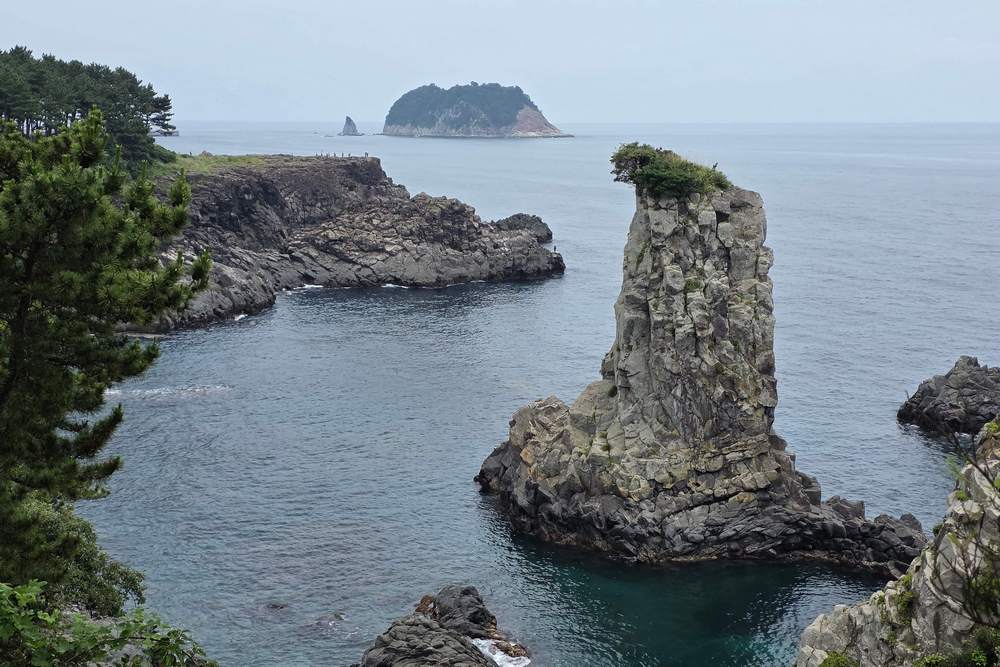
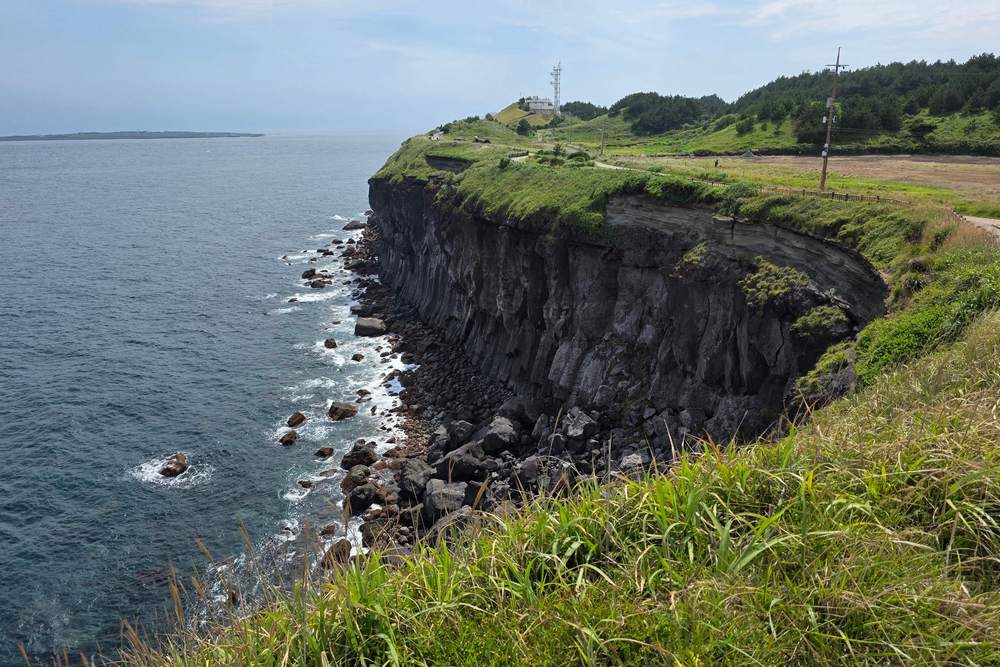
Generally, Jeju has several areas where it’s fairly built up: particularly in central Jeju, and Seogwipo town in the south. The rest of the island – particularly the central parts – is countryside-like, with a view of Hallasan Mountain visible on clear days. Though even in central Jeju, where we were staying over the last stretch of our trip, the place never felt very crowded. The only times when we had a sense that Jeju is a popular tourist destination was when we were visiting selected attractions – specifically Yongmeori Coast, Osulloc Tea Museum, Camellia Hill Botanical Garden, Mt. Seongsan, and Jusangjeolli Cliffs. In those places, there were routinely busloads of visitors about, often from Chinese-speaking countries. This doesn’t mean that the rest of the places we visited were bereft of crowds: rather, either these places weren’t among the must-visit attractions for the majority of tourists, or the areas were large enough to thin out the crowds.
Payment systems on the island seem to be at opposite ends: there were several places – particularly selected attractions – that only accepted credit card payment, while a few others only accepted cash. Notes were in reasonably good condition, though not of the polymer type we’ve seen in other countries, but they were at least easy to understand and use. Coins were in occasional use and of just two denominations: 100 and 500 won – so quite manageable. After trips to Japan, I’m honestly thrilled not to have to deal with pockets and wallets stuffed with coins of all denominations!
We don’t normally have fizzy or sugary drinks at home, and we only snack occasionally. But when on vacation, we seem to go on a junk food binge each time! So, for that, convenience stores were everywhere and a life-saver. The prices of snacks and such seemed to be slightly higher than expected and about equivalent to Singapore. I’m not sure if it’s because of the global inflation stemming from tensions currently in the Middle East, or because Jeju is an island and a portion of the costs goes towards transportation and logistics. Either way, one common item in convenience stores, shops, and night markets was what looked like orange juice, but was actually made from tangerines. I assume these are locally manufactured, though taste-wise, I couldn’t tell the difference between them and a premium bottle of orange juice from elsewhere!
We were also worried whether we’d be able to easily call for cabs using Kakao. It was easy enough in Busan and Seoul, but we weren’t assuming it would be the same in Jeju. Thankfully, that fear turned out to be unfounded: not that we had to use the app to call cabs that often, as we were driven around by Mr. Lee for 6 of the 9 days. But on the days when we were on our own, we were able to easily find rides that were routinely just minutes away from where we were. Place names were occasionally challenging though, in that the English translations of addresses weren’t always correct. So, validating place names and their actual map locations was necessary.
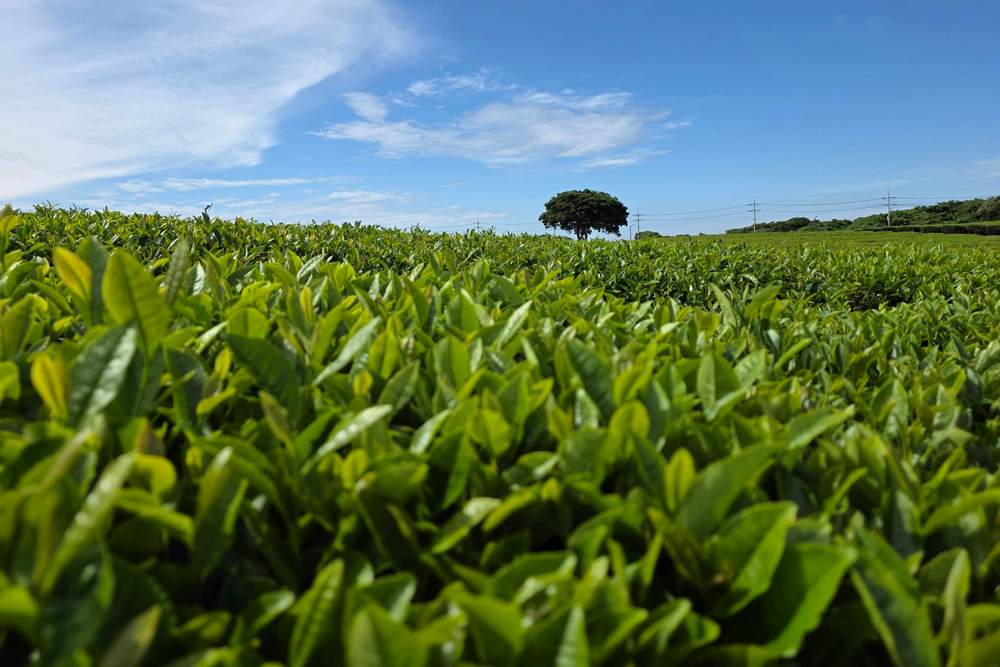
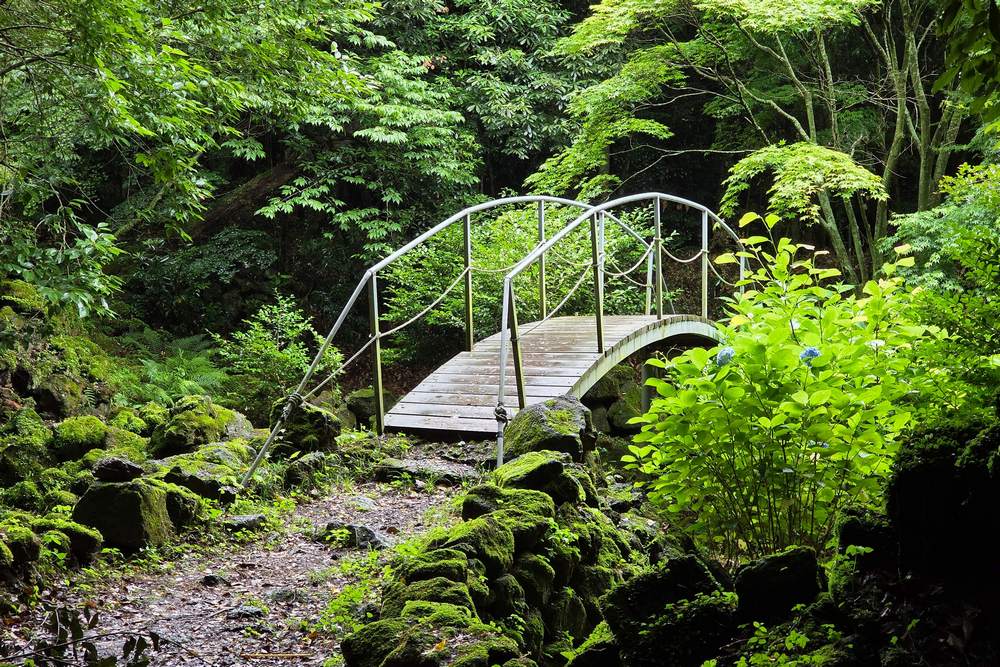
There is also some perception online about the general personalities of South Koreans, in that, in terms of general politeness, they sit somewhere between the Japanese and the Hong Kongers. Actually, I found the locals in Jeju friendly: not in the extremely courteous manner of the Japanese, but I appreciated that they were at least friendly and authentic. OK, the drivers we got through Kakao were generally not talkative: maybe it was a language barrier as soon as they realised that we couldn’t really speak Korean! And like our previous trip in 2024 to South Korea, many locals instinctively conversed with us in Mandarin!
Again, like Japan, I saw little use of vehicle horns to express irritation and annoyance on the road. I did notice in Jeju a lot of, well, risky driving – including vehicles that casually continued through red lights at traffic junctions, cyclists doing sudden U-turns on the road that Mr. Lee had to emergency brake to avoid colliding with, and lots of speeding. In other words, drivers in Jeju are like those in Singapore – without the honking haha.
In short, this was a great trip for us. Six itinerary-intensive days, one somewhat lighter day because of the weather, and two laid-back days where we just relaxed, stayed in the city centre, and didn’t do much. And it didn’t cost that much – expenditure sat between China and Japan, and would have been even lower if we’d decided to drive ourselves. In short, South Korea is a fantastic place to visit. Though there’s a challenge after this trip: if we wanted to return to South Korea, where else could we go? We’ve pretty much covered all the main places and fairly thoroughly: Busan, Seoul, and Jeju. Still, it’s something to think about if we return to the country for a fourth visit!