While this was the longest vacation we’ve taken as a family — 21 days, compared to the 18 days we spent in South Korea last year — the number of distinct places we visited this trip was actually fewer. This is largely on account of the fact that we spent a lot of time on the road just trying to get from place to place. The sights while traveling were incredible though, and what I’ve walked away with from spending 3–4+ hours in the vehicle every day during most days in the first two weeks was how vast China is. The built-up cities are crowded of course, but the inner country is sparsely populated and there were long stretches where there were only two-lane roads cutting across the mountainous and hilly landscapes with little other signs of life.
So with that out of the way, these two posts will basically summarize the places we visited and our overall comments for each. Starting with Part 1 – Days 01 to 09:
Day 1 (Singapore – Dali)
[Blog post here.] Not much happened on the first day. During our months of planning, we waited (like forever) for Scoot to make available their tickets for their direct flights from Singapore to Kunming, and when we couldn’t wait anymore, looked for alternate options. We settled on Thai Airways on account that this was a full-service airline and had reasonably OK arrival times into Kunming. No Air Asia for us! The Thai Airways flight was enjoyable: we were fed very well, the crew was nice, and there was plenty of legroom in economy.
Our arrival into Kunming was an assault on the senses — specifically the number of touts at the arrival floor all wanting to drive us to Kunming (or somewhere). The info counter lass also was not helpful when we asked for help with the Didi app. Pro-tips: #1: if you’re foreign to all this, just completely ignore them and don’t even try to start a conversation with these folks, lest you encourage them that you’re a potential customer! Just walk away and be assured that their dogged persistence isn’t personal. Pro-tip #2: Make sure that your China apps — especially Didi — are the correct ones [there is apparently a within-China Didi app, and one that is outside it that won’t work], have payment set up correctly, then head down to the ride-hailing floor to find the pick-up point.
Kunming station was busy, but we found our way to the correct train gate for our ride to Dali. More pro-tips: #3: foreign travelers like us need the assisted queue line, so look for the queue line which is manned. Your passports will get scanned by the staff manning the counter and you’d pass through. Pro-tip #4: First-class rides on the High-Speed Rail are much more comfy than second-class. Sure, the latter will get you to your destination just as well, but I found the second-class coach to be much noisier.
It was night time when we got to Dali. Fortunately, we’d alerted our accommodation ahead of time, and they sent a cab ahead to pick us up. Pro-tip #5: Consider getting your hotel to pre-arrange pick-up if you’re staying near or within Dali Ancient Town, as there are many small side streets that you don’t want to have to navigate around at night!
Day 2 (Dali)
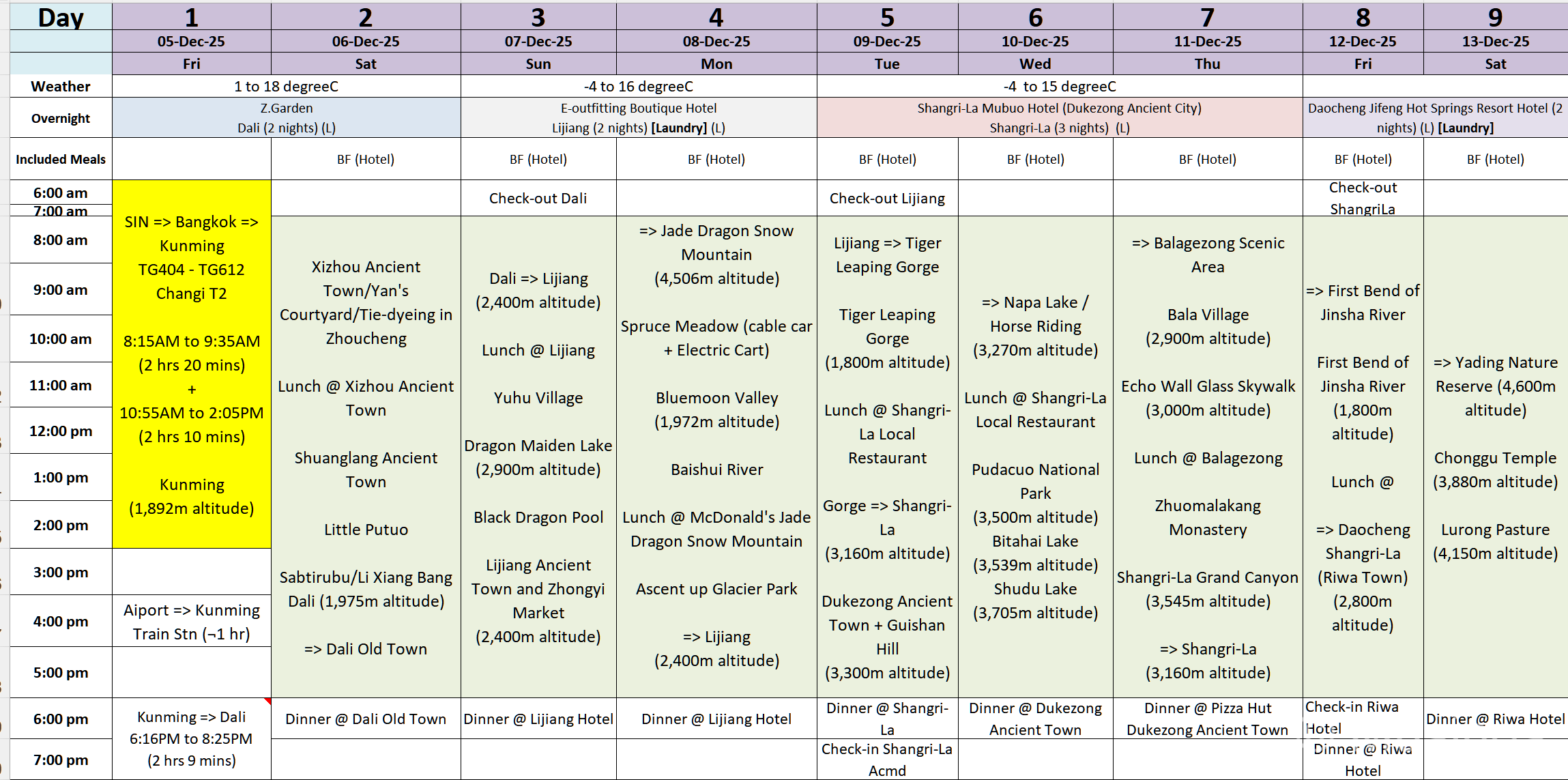
Xizhou Ancient Town (~1 hr) [blog post here]: very quiet and sedate area compared to the bustling Shuanglang, Dali and Lijiang that we visited later. If you like watching the locals go about their business without feeling like you’ve been thrown into a tourist zone, then this is for you. The Dye shop (~1 hr) visit was informative if you’d like to see how it’s been done for hundreds of years, and how generational families running the business are still doing it.
Shuanglang Ancient Town (~2 hrs) [blog post here]: this one is busy: the initial stretch looks like something right out of a Greek city by the Mediterranean Sea, but the further-on areas are akin to the old Chinese towns that you’re expecting. The area has many visitors and tourists, and there are more modern establishments, e.g. KFC and Chagee. The waterfront areas are especially scenic, and there are many photographers working the area if you want your Instagram shots to be taken by what looked like professionals.
Little Putuo (~1 hr) [blog post here]: a super small tiny island that you can observe from the shore area. The island is close enough for you to swim to if you really dared it, but for sane folks, you have to pay for a very short boat ride across if you want to set foot on the island. The island is interesting to look at, but if you’re not visiting it itself, then you probably won’t spend more than 30 minutes here. The seagulls and birds working the shoreline though are fun to engage with, especially if you have bird feed!
Li Xiang Bang (~1 hr) [blog post here]: super crowded and super touristy. Pro-tip #6: Unless you’re a sponsored influencer or have gobs of money to spend at their pricey cafes and accommodations just to get access to those roof areas for you to take your glamour pictures, it’s OK to skip this area and just be content looking at other people’s nicely taken pictures.
Dali Old Town (~2 hrs) [blog post here]: busy town area with long stretches: lots of retail, F&B and services, but thankfully plenty of space still for people to move around during non-peak seasons. Pro-tip #7: Of the many ancient towns we visited this trip, we liked Lijiang’s the most for its very picturesque setting.
Day 3 (Lijiang)
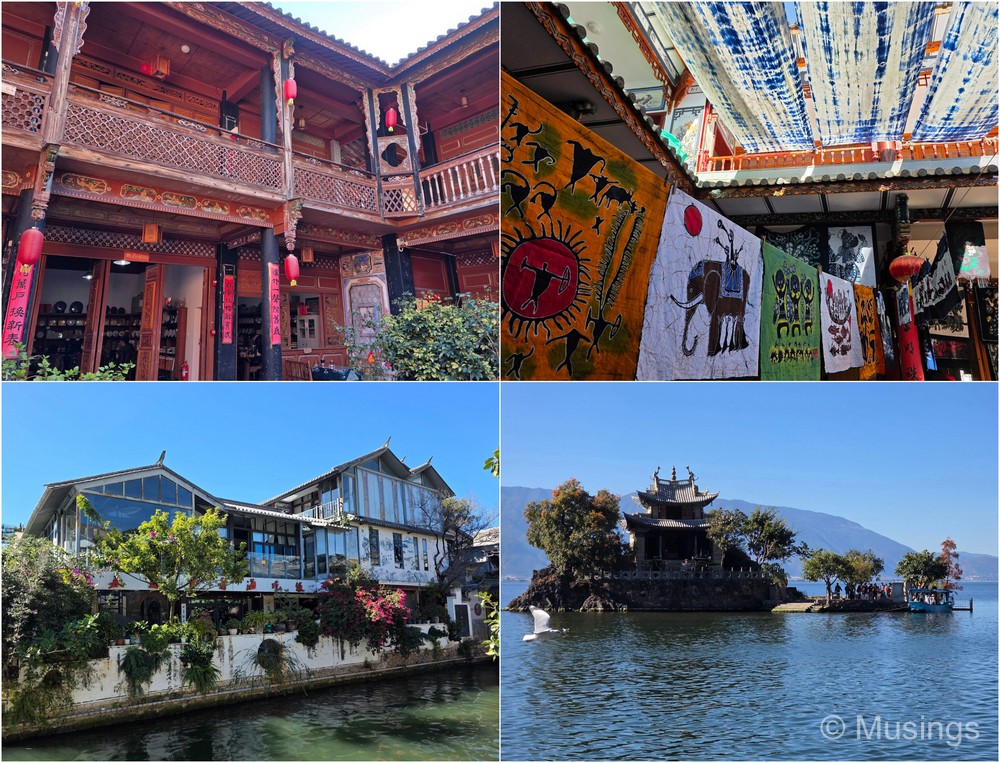
Yuhu Village (~1 hr) [blog post here]: small village on a hill, so be prepared for your first stretch of physical activity! There’s not much in the village itself, but most people making their way up are likely going to visit the Dragon Maiden Lake, which is a nice peaceful water area, and some houses that look right out of Hobbiton. So, it’s OK for a quick drop-by if you’re prepared for the climb, but otherwise also skippable.
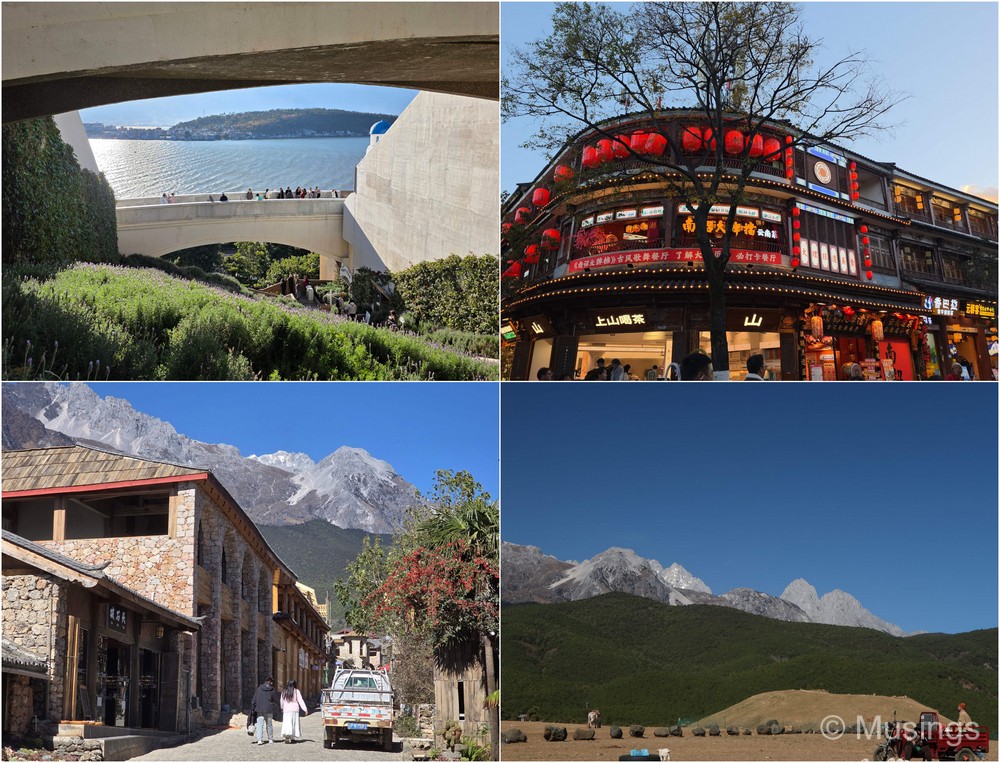
Black Dragon Pool (~1 to 2 hrs) [blog post here]: lovely pools set in a traditional Chinese garden area. There are also paddle boats that you can ride, and there are spots where you can take pictures with the Jade Dragon Snow Mountain in the backdrop.
Lijiang Ancient Town (~2 hrs) [blog post here]: within walking distance of the Black Dragon Pool is Lijiang’s Ancient Town. The area is also touristy and can get crowded, but at least it’s pretty! The waterways and late autumn colours made for many picture opportunities. Zhongyi Market is adjacent to this ancient town, but unless you’re interested in local produce wet-market style, it’s OK to skip the market and just concentrate on the ancient town.
Day 4 (Jade Dragon Snow Mountain)
Jade Dragon Snow Mountain (whole day): so many things to do and visit in this area. Pro-tip #8: centre your visit to Yunnan on this day and do your prep work! Of the many spots we visited here:
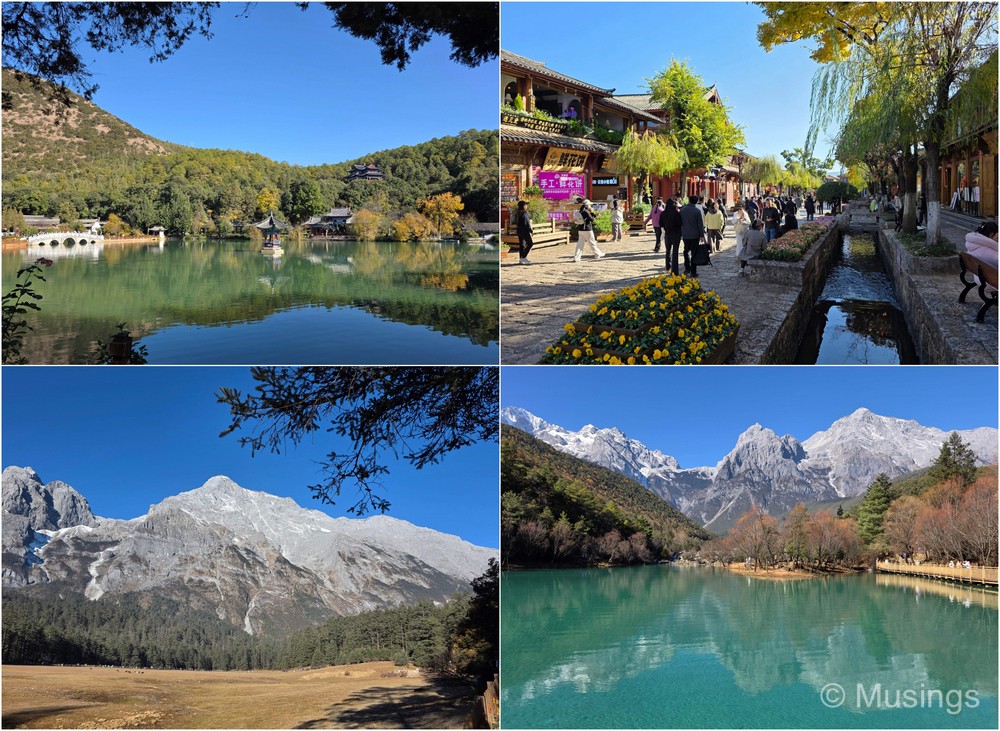
Spruce Meadow (~1 to 2 hrs) [blog post here]: must visit for your first close look at the mountain. Very large circuit that you can walk around, but at peak hours — including the late morning when we left — the area gets crowded. Pro-tip #9: Go early in the morning if you can and get your fab pictures taken.
Bluemoon Valley and Baishui River (~1 to 2 hrs) [blog post here]: lovely ponds with turquoise waters and cascading waterfalls. The area can get really crowded not only because of visitors, but also couples having their bridal photos taken. Pro-tip #10: The crowd thins out — somewhat — as you walk down the river that is no less scenic.
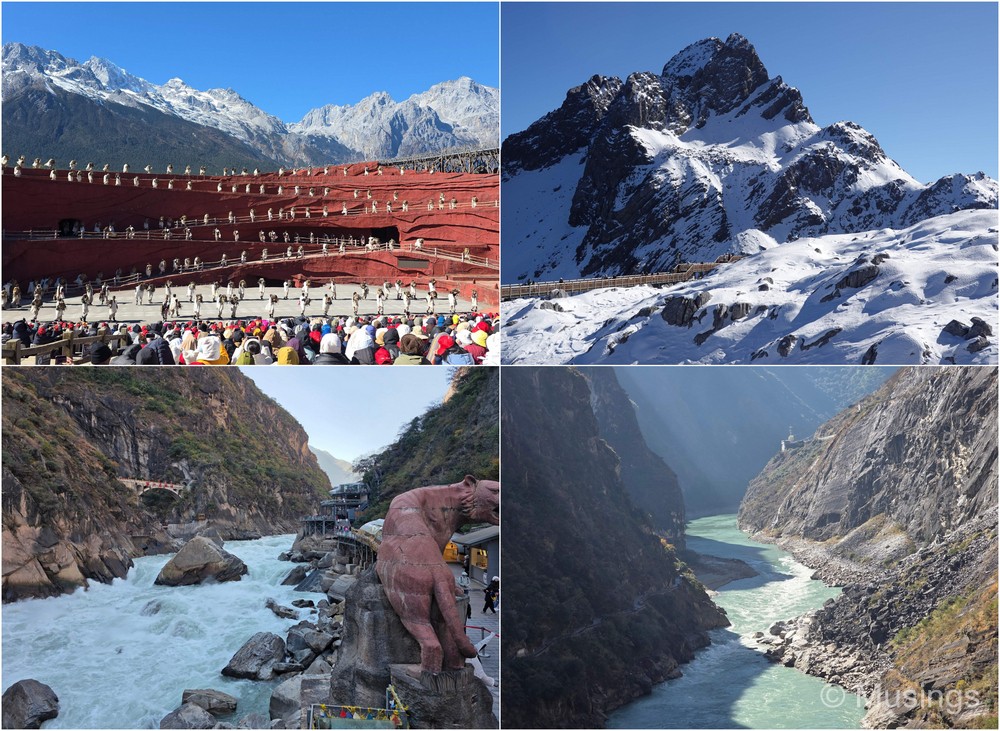
Zhang Yimou’s ‘Impressions Lijiang’ (~1 hr) [blog post here]: if you can’t get enough of our annual NDP spectacles, this is for you. Huge in scale, hundreds of performers, and there’s a display with English translation for those of us who wrestle with the language.
Glacier Park (~2 hrs) [blog post here]: having seen the mountain from ground level and you’re already here, the temptation to actually ascend it would be super strong! The walk up is really quite doable for most people, and there are plenty of rest stops for you to take breaks.
Preparation Pro-Tip #11: do not overbuy herbal remedies and O2 cannisters when your tour guide/leader brings you to your first shop for these supplements. Buy enough for just 1 day first, then see however one adjusts. O2 cannisters are available everywhere. We had western meds prescribed from home, and we didn’t finally need the (pricey) herbal remedies. For the four of us, I was fine without O2 at altitude, the two kids needed a little, and the wife more. 2 cannisters for us to share were more than sufficient for the day up Jade Dragon Snow Mountain.
Day 5 (Lijiang – Shangri-la)
Tiger Leaping Gorge (~1 to 2 hrs) [blog post here]: the rushing waters of the Jingsha River here were quite a sight. The walk down the steps is easy. Pro-Tip #12: the temperature down below at the water level is much colder than up top, so dress appropriately. The walk back up to the car park takes a bit more effort, but is ultimately doable: it took us around 20 minutes to walk back up, slowly. You can also pay the exorbitant fee to ride the escalators back up if you want, but IMO, the price of the escalator ride is not worth it.
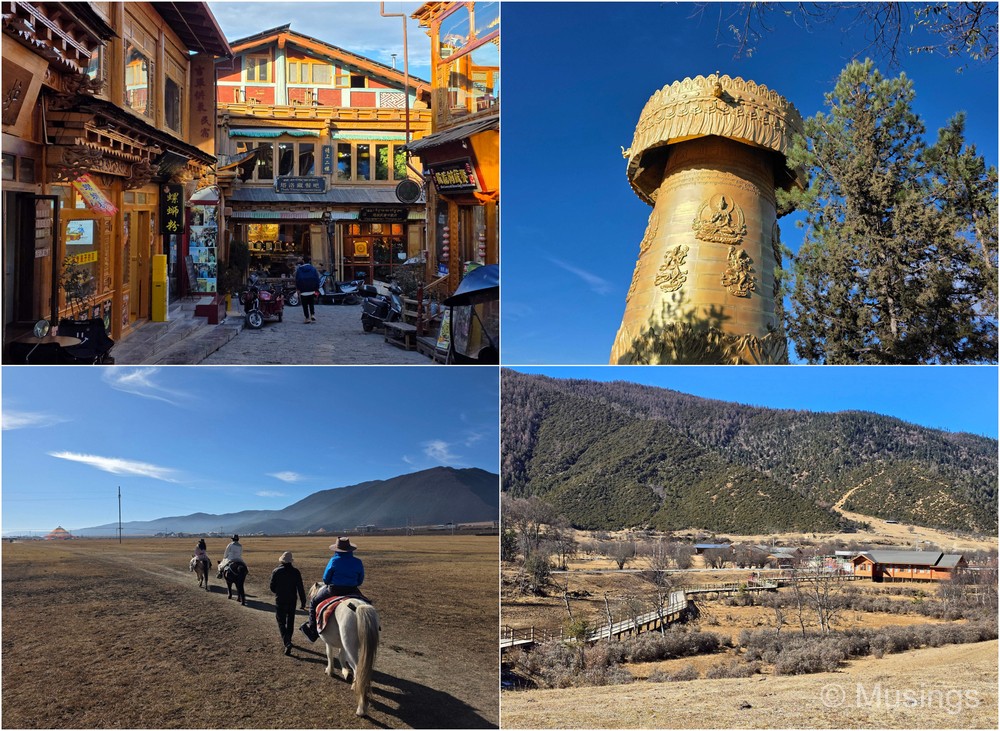
Dukezong Ancient Town (~2 hrs) [blog post here]: like the Dali and Lijiang ancient towns, this one has the same range of F&B, services and craftsmen places, but the architecture reflects more of the Tibetan culture. The central town area here is large, and there are modern restaurants/cafes for those of us already sick of local cuisine, and these include KFC, Luckin’ Coffee, ChaPanda, and Pizza Hut.
Guishan Hill (~1 hr) [blog post here]: it’s a steep climb of steps to get up to the hill where the temple and huge prayer wheel is. The climb is very short but exhausting! The panoramic view from up top is OK but Shangri-la itself isn’t a town that is known for amazing sights from elevation. Pro-Tip #13: So, this area is ultimately skippable if you’re short on time.
Day 6 (Shangri-la)
Napa Lake (~2 hrs) [blog post here]: most folks will come to this spot for horse-riding, and it’s a well-developed business here. The area that you’re riding in is probably very scenic in the right season: for us traveling in winter, the place looked unfortunately drab. The horse-riding experience itself is fun. Pro-Tip #14: depending on the horses’ temperaments, be aware that you might not ride close together as a family. The entire experience is safe, but if being together is critical to you, do talk to your guide to see if the horsemasters can facilitate this. Not sure if they would though, but no harm trying. Also, depending on your itinerary, there are other places where this is also offered: including (for us) at Tagong Grasslands and also Yala Snow Mountain observation area, so don’t feel compelled to jump to do horse-riding immediately at Napa Lake.
Pudacuo National Park (~2 to 3 hrs) [blog post here]: huge national park with two important lakes. Like Napa Lake, this area probably looks fantastic in non-winter seasons, but things were a washed-out brown for us in December. The aerial videos of it looked much better though. But… Pro-Tip #15: skip it in winter if you’re short on time.
Day 7 (Shangri-la)
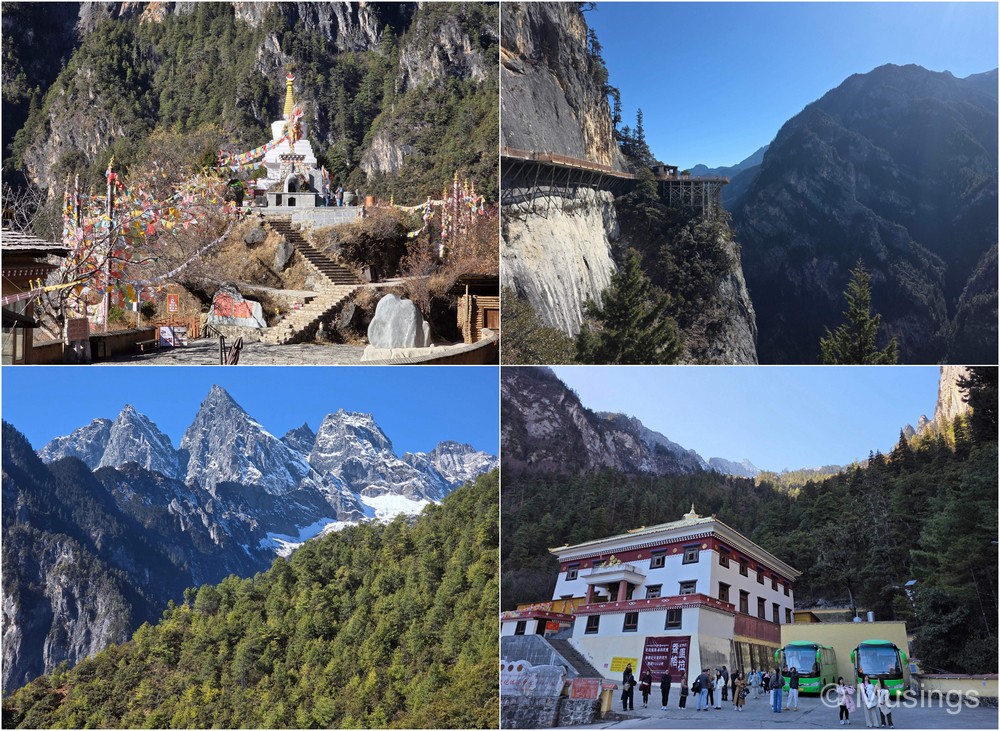
Balagezong National Park (whole day): like our visit to the Jade Dragon Snow Mountain on Day 04, this was one of our itinerary highlights, and it did not disappoint. As we hear it, the park gets very crowded in peak months, so we were very lucky to have visited in low season and observed the many incredible viewpoints in this park. Pro-Tip #16: dining options are a little scarce inside the park, so bring along biscuits and sandwiches to tide over if you need to.
Bala Village (~1 hr) [blog post here]: small village for you to see how the ethnic people lived and worked, and is a necessary stop point before you continue on.
Echo Skywalk (~2 hrs) [blog post here]: must visit for the epic views of the mountain range. Worth the 1km+ walk on the boardwalk to get to the glass platform. You don’t have to go onto the glass platform if heights terrify you. For folks flying drones, flying from here was one of the most exhilarating experiences.
Zhuomalakang Monastery (~0.5 hrs) [blog post here]: skip it if you can, though we couldn’t as it was a necessary stop for our bus route.
Balagezong Grand Canyon (~2 hrs) [blog post here]: lovely canyon with a long 2km+ boardwalk if you want to finish the circuit. Drone signal can be easily lost in the canyon, so watch it!
Day 8 (Shangri-la to Daocheng)
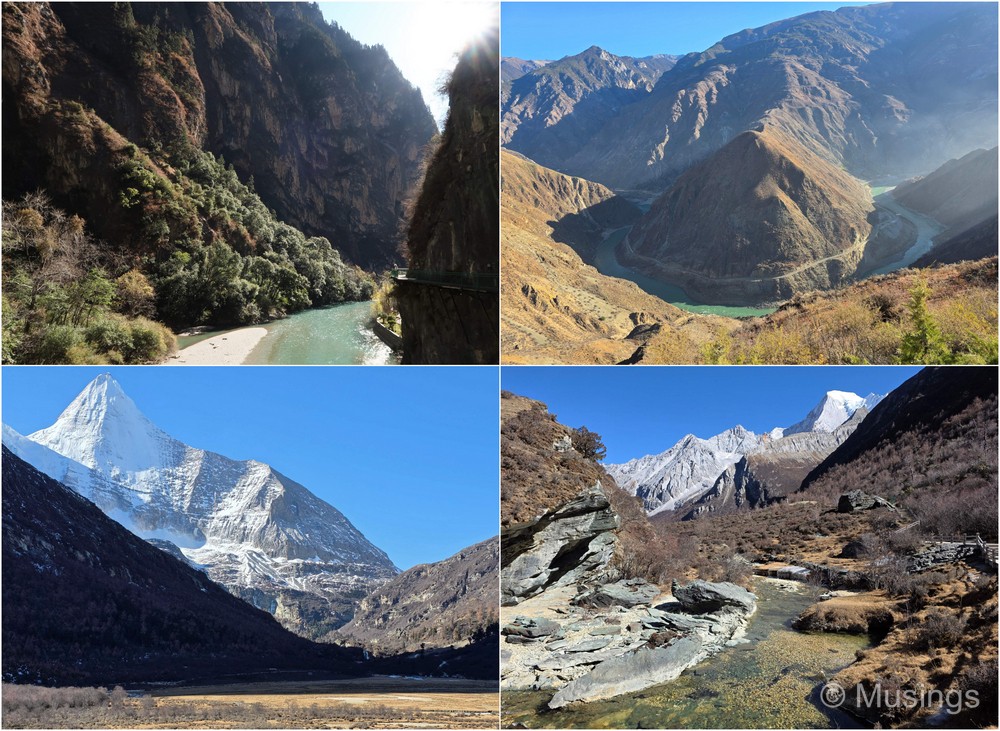
First Bend of Jingsha River (~1 hr) [blog post here]: must stop if you’re in the general area. The viewpoint from the higher elevation down to the river is amazing. Not necessary to fly the drone here as the viewpoint from the viewing platform is about what you’d get with a consumer drone too, unless you’ve (somehow) obtained the necessary permits to fly very high or very far.
Day 9 (Daocheng)
Yading Nature Reserve (whole day) [blog post here]: our third itinerary highlight of this trip. Lots (and lots) of walking involved. We were again visiting in a non-ideal season so access to selected lakes with mirror-like waters were closed off. We spent most of our time walking Luorong Grassland, a vast expansive area between the mountains, and were treated to amazing views, albeit in winter. Pro-Tip #17: the boardwalk walk does not involve ascents for the most part, but it’s nonetheless physically demanding. Do be mentally prepared, as once you get started, know that you’d have to walk back the same way (or around the circuit) later on to get back to the bus pick-up point. The end point for us was Gongga Lake, since further access beyond that was closed. The café at our end point sells cup noodles, which were a real treat in cold weather and after walking for > 1 hr.
That’s a wrap for Days 01 to 09. Continued in the next post!
Your travel stories are so good. Detailed and engaging too. Thank you. I am heading to west Sichuan and yunnan in October. I wonder if you could share your transport arrangement in shangrila and also to daocheng/yading. I haven’t found my driver or transport yet for this leg of journey . Thank you so much for sharing your holiday journey
Nice covered and details and professional information and the area Yunnan is so beautiful and many things to do activities.
Thanks!