We’re just about a week away from traveling for our year-end holiday to Yunnan–Western Sichuan, so it’s about time to write an update post on our preparation for the trip. Random notes and comments in no particular order of importance!
Of the 21 days in the itinerary, 13 will be taken care of by the local tour company we’re working with. Day 01 and Day 21 will be spent getting into and departing from the country. So, basically, we have six full days to figure things out on our own. Three of those six days will be on a trip to Jiuzhaigou National Valley, and we’ve worked out our travel plans to reach the national park and return from it. The routes to take are fortunately pretty standard and well documented by many other previous visitors. The decisions to make largely lie in selecting the appropriate train and connecting bus timings. We largely went with the approach that we wouldn’t be in a rush to get to Jiuzhaigou on Day 15 since we’d have the entire day to slowly make our way there. Likewise, on Day 17, we’d be taking our time to depart the park and return to Chengdu.
There is a very large number of interesting spots within Jiuzhaigou itself. But while we have just one full day to spend touring the park, several of these places would be less interesting in winter. We found one particularly useful video put up by another traveler which suggested a movement plan appropriate for a December visit, and it prioritised places to visit and likewise spots that could be safely skipped on a year-end visit.
We also have three remaining days after our Jiuzhaigou visit. The missus is very interested in visiting Dujiangyan Panda Park, and also the irrigation system that’s in the city. Yep, we’re not gonna try visiting the larger and more popular panda reserve in Chengdu itself, after reading about how crowded and chaotic it can get even during off-peak seasons! We were initially even exploring spending a night in Dujiangyan city itself, but dropped the idea as we would have already suffered a very large number of accommodation changes by this point in the trip and weren’t certain if we’d want to do any more. So, basically, for the last four days of this 21-day trip, we’d be using Chengdu as a base for exploration of Dujiangyan and also any other nearby places around Chengdu.
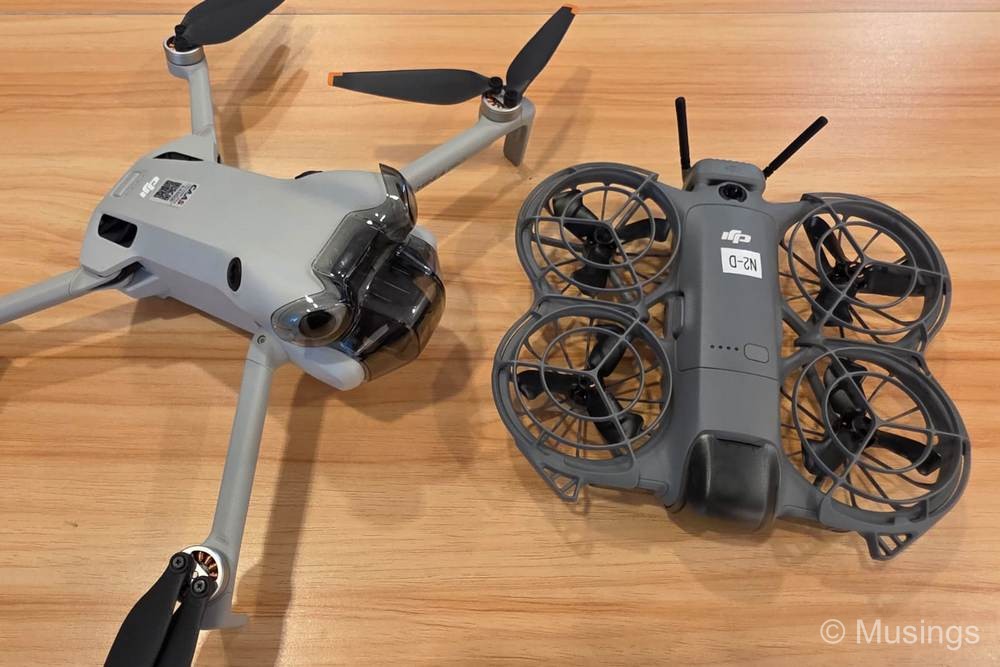
A major activity I’m really looking forward to on this trip is doing drone videography to capture the natural scenery. Registration of all drones is required in China, so I got a local agent to assist in that process. It has been more than a year since I flew the DJI Mini 4 Pro during our Cebu vacation in June 2024, but a trip to Bishan Park ensured that the Mini Pro 4 was still working as normal — the actual flying maneuvers I’d have to wing it on site next week! I’m also mentally ready to likely crash during a flight, since a number of places I’d be intending to fly are at altitude, and this would be my first time flying well above sea level. The original plan was to bring the Mini Pro 3 for the trip, but testing of that older drone showed persistent connection issues with the remote controller. A few Mini Pro 3 owners have also faced similar difficulties recently, and it might be a firmware-related bug. So, the Pro 3 is now grounded. In its place, I just picked up the recently released DJI Neo 2. This super-light drone ticked all the boxes: capable of 4K video capture, obstacle avoidance, super lightweight at well under 250g, and built in with a number of ready-to-use flight modes. The only downside is its fairly pedestrian battery life, which permits just about 10–11 minutes of flight time: less than half of what the DJI Mini Pros can do. Still, it’s what it is, and the DJI Neo 2 at least is built to take hits: YouTube has plenty of videos of enthusiasts crashing their Neo drones and the thing can still fly like normal thereafter.
I’ve also previously blogged about what camera gear to bring on each trip. If this was a return trip to South Korea or Japan, I’d probably be leaving my Sony ILCs back home and just make do with smartphones and maybe the Sony RX100 VII. But this trip is different: our itinerary in Yunnan and Western Sichuan is extremely heavy on natural sights. And even more importantly: we’d be traveling in private vehicles. So, unlike previous trips where we largely made our way each day using public transportation, the gear I’d like to bring is going to be less constrained weight-wise. I’m still undecided whether to bring the Sony A73 with the venerable 24–100mm f4 lens, or the Sony A6600 with the 18–135mm lens. I’m currently leaning toward the latter only because it offers a good balance between image quality and weight, but I’ll see.
The last prep bit was whether we could do anything for possible altitude sickness. The progression of ascent wouldn’t be too abrupt: we’d be arriving into Dali at 2,500m altitude, and over the span of six days gradually make our way up to altitudes of 3,500m, before hitting 4,500m to 5,000m around Day 12 or so. Moreover, we’re on a private tour so we’d be able to amend the itinerary as we need to. Still, a check with local pharmacies revealed that a doctor’s prescription is needed for altitude sickness medication, so that’s something we’ve been looking into too and we’d likely be getting the necessary prescriptions very soon.
That’s a wrap for our pre-departure notes. The next post will be the start of our 21-day trip, so more to come very soon!