The first of the last two posts in this series covering our 11-day trip to Cebu — and this one will again be about the image and video capturing experience during the trip.
Since 2022, when pandemic restrictions were lifted and we started travelling again, I’ve been taking fewer and fewer pictures using interchangeable-lens camera systems (ILCs). Smartphone imaging has now reached a point where there is little advantage to using ILCs if the final destination of the pictures is social media. At this stage, the pictures I get from the Samsung S24 Ultra are invariably sharp, with well-judged colours, and are often immediately usable for posting without any further edits to Facebook.
However, the one area where the S24 Ultra still struggles is action photography — particularly the kind we were doing, i.e. snorkeling. It performed well enough during our canyoneering outing since the canyon was a freshwater river and relatively shallow in most parts. The S24 Ultra could easily have survived a dunking if we had dropped it into the shallow river, though I still kept the camera in an underwater case for additional protection.
Trying to use the S24 Ultra while snorkeling in the sea was a different matter altogether. I could not get it to properly judge colour temperature underwater, and the camera itself was simply too fiddly to operate while trying to swim. So I eventually gave up using the S24 Ultra altogether during our snorkeling outings.
The two other most important pieces of equipment this trip were the DJI Mini 4 Pro and the DJI Action 3. Most of the snorkeling videos we captured were recorded on the Action 3, and the footage was remarkably well stabilised. The little camera judged colour temperatures accurately underwater and instantly switched back to normal when I resurfaced. I noticed that most visitors — and our guides — were using GoPros, and a few of the latter were particularly interested in my DJI Action 3, with one remarking how crisp the footage from it looked. Its long-lasting battery also meant I could record an entire day’s activities, review quite a bit of footage, and still have plenty of battery power left.
The DJI Mini 4 Pro captured all the lovely aerial photos and videos for this trip. I was better able to judge ambient lighting this time as well, and ensured that I mounted the correct ND filter for most flights — except for one misjudgement over Loboc River on Day 08. Apart from the flight through the Bilar Man-Made Forest, I was largely flying over open terrain, so the DJI Mini 3 Pro would probably have performed just as well despite its somewhat less complete obstacle-avoidance system. That said, my Mini 3 Pro’s RC controller was under repair, so the Mini 4 Pro came along instead.
The Olympus TG-5 had been critical in helping me capture great marine life pictures during our 2019 Maldives trip. But on this trip — apart from the whale shark and sardine run activities — we saw far less interesting marine life during our snorkeling outings. As a result, I did not get as many memorable photos with this underwater camera. While the TG-5 is capable of recording 4K video, the footage I captured while snorkeling suffered from so much camera shake that most of it was unusable.
As I had expected, the Sony RX100 VII saw very little use. Apart from a few shots while on the incoming flight into Cebu and at the Tarsier Sanctuary — where I needed the optical zoom — the RX100 VII did not see much action. It remains a lovely compact camera capable of producing excellent images, but I clearly need to be more intentional about using it! Perhaps on our next trip in December.
Finally, the Samsung Tab S9 once again proved invaluable for blogging on the go. It came out whenever we were waiting for food to arrive or while sitting at the airport waiting for our flight home. I doubt I could have done this much real-time blogging without this tablet.
Photo and video numbers for the trip were as follows:
Sony RX100 VII: 67 photos in .ARW RAW format (keeping 0.8GB)
Samsung S24 Ultra: 1,956 photos in JPG (keeping 1,626 photos / 9.76GB) + 70 videos (12.7GB)
Samsung S23 Ultra: 201 photos in JPG (0.734GB) + 47 videos (12.21GB)
DJI Action 3: 50 photos in JPG (0.5GB) + 85 videos (39.4GB)
DJI Mini 4 Pro: 32 photos in DNG+JPG (2.93GB) + 59 videos (123GB)
Olympus TG-5: 343 photos in ORF (3.92GB) + 15 videos (4.66GB)
When put into a table comparing photos taken across our family trips since 2017:
| Trip | Photos taken | Videos taken | Storage used | Photos kept | Keeper rate |
|---|---|---|---|---|---|
| Western Australia (2017) | 5,828 | No records | 77GB | 3,331 | 57.2% |
| Taiwan (2018) | 7,422 | 182 | 148GB | 4,200 | 56.5% |
| Maldives (2019) | 2,320 | 137 | 82.4GB | 1,518 | 65.4% |
| Chūgoku & Kyushu (2019) | 4,951 | 149 | 144GB | 3,283 | 66.3% |
| Kanagawa & Hokkaido (2019) | 7,652 | 216 | 309GB | 5,076 | 66.3% |
| Kansai (2022) | 7,683 | 429 | 196.2GB | 5,539 | 72.9% |
| Hanoi (2023) | 3,137 | 87 | 46.2GB | 2,090 | 66.6% |
| Chubu-Kanto (2023) | 11,663 | 372 | 146.93GB | 8,042 | 68.9% |
| Cebu (2024) | 2,649 | 276 (including drones) | 192.5GB | 2,319 | 87.5% |
Generally speaking, we took far fewer photos on this trip compared to the most immediately comparable trip last year to Hanoi. However, the total storage used for photos and videos far exceeded Hanoi’s — largely because of the large amount of action-cam footage (39.4GB) and drone video (a whopping 123GB!).
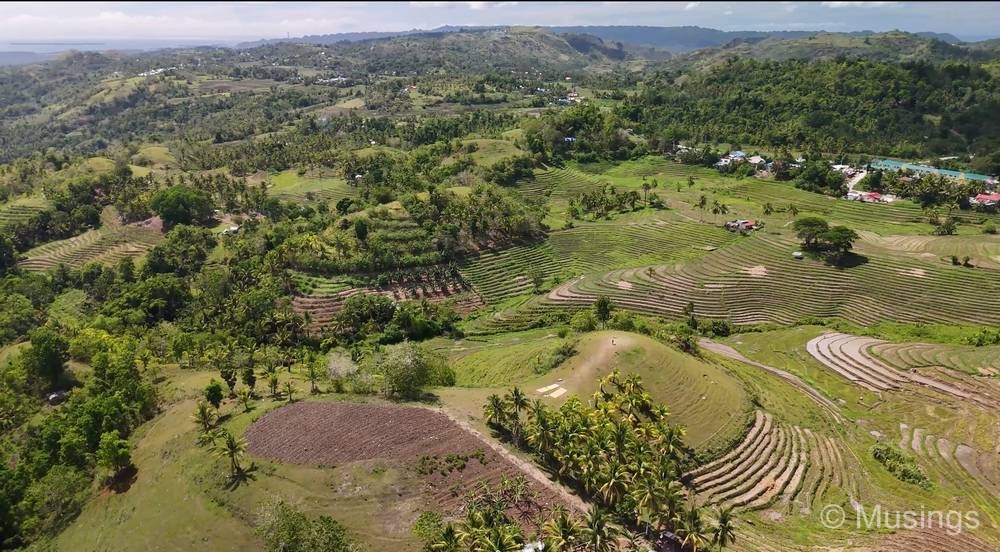 The DJI Mini 4 Pro over Cadapdapan Rice Terraces in Bohol.
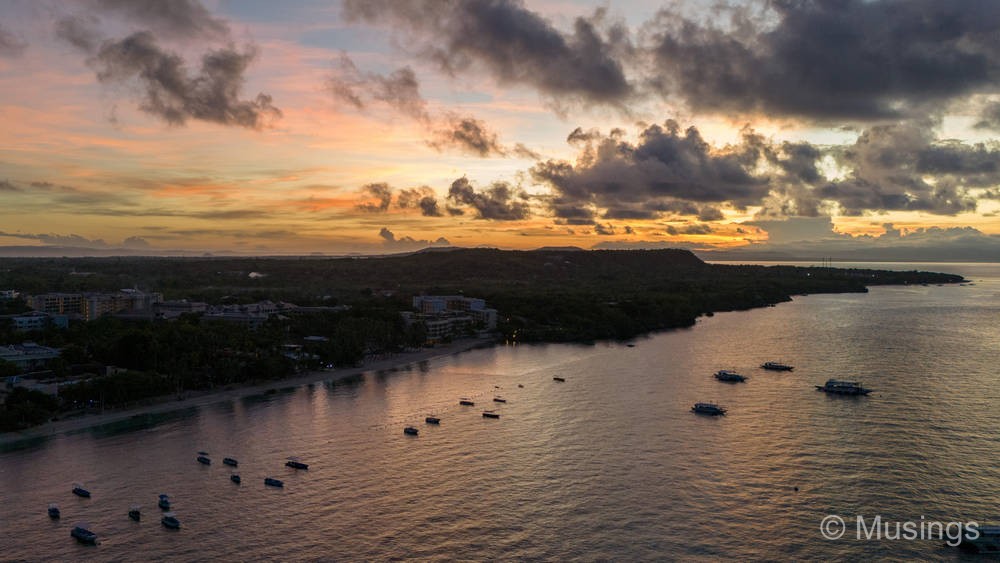 Morning sunrise at 5:10AM at Bohol Island.
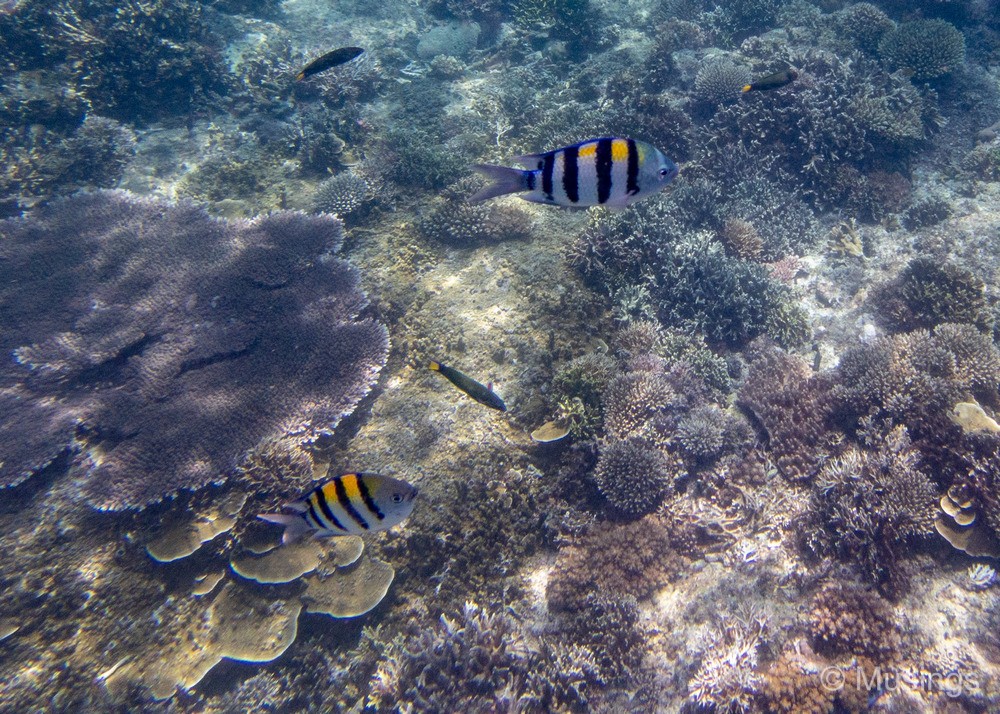 Marine life captured using the Olympus TG-5.
For mobile connectivity, we bought three connections for the trip: two eSIMs for the wife’s and my phones, and a backup nano-SIM that I kept in the Samsung Tab S9. All worked more or less as expected, except in places where connection quality was weaker — particularly in Bohol and on Malapascua Island.
Finally, my equipment takeaways for the next trip:
Be more deliberate in photo-taking if the RX100 VII is coming along.
Samsung S24 Ultra and Tab S9 for the win!
The DJI Action 3 and DJI Mini 4 Pro are excellent imaging devices — when there is an opportunity to use them.
Bring along a larger-capacity portable drive for backups, especially if drone videography is involved. My 5-year-old Western Digital 512GB SSD has usually been sufficient for daily travel backups — but this time, it almost wasn’t!
Next post: our final notes!