This 21 day family vacation to Yunnan and Western Sichuan has been the longest we’ve had. We initially thought we’d be able to handle that long a stretch without breaking a sweat. As it turned out, by the time we’d returned from Western Sichuan to Chengdu on Day 14, we were pretty much worn out and lethargy was seeping in! So much so that – in a sense – we opted to take things slow, did not really try very hard to pack in as many sights and places to visit anymore, and half-just waited our flight back home.
This has been my third trip to China, and though this was my first trip to the interior part of the huge country – the first two visits were work-trips and centred on the eastern big cities – I was nonetheless still stunned by how rapid has China’s transformation continued. Sure, there were still relatively undeveloped areas that we were in, but the connective bits – including the highways, tech infrastructure, payment modes – clearly show a country that’s successfully coupled technology and yet kept a lot of its old charm. What were my key takeways this trip, and things to keep in mind in the likely event we’d returned for a second family trip? In no particular order of importance:
Our last several family vacations have been in Japan and South Korea, and it was only this trip to China when I realized something: folks in China – even the younger ones – basically speak practically no English at all. Generally speaking, we managed just fine as the missus can converse in Mandarin, and myself to a lesser degree – though we had difficulties with heavy accents, dialects, or when the locals speak fast. But there were a few times when I instinctly lapsed back into using English words to describe something I couldn’t figure out the Mandarin equivalent of: and each time, I got a blank stare. That was quite unlike in South Korea and Japan, where the young adults invariably could understand simple English words.
One thing that I observed in my previous two trips that I saw again, unfortunately, was that a lot of people smoked. Walking along the smaller sideroads at Chunxi Road in Chengdu was like walking through a smoke chamber. The wedding couples we saw at Blue Moon Valley: the instant there was a break inbetween photo shoots, the groom would immediately light a cigarette, and a couple of times, I saw brides did the same. The Didi cabs we booked: when we booked the Premium Service ones for our hotel/airport transfers, the rides invariable were vehicles that were pristine, and drivers often very polite, well-groomed and sometimes even uniformed – and the vehicles smelled clean. For every other ride, the Didi vehicle reeked of cigarette smoke. No judgement, and I was more intrigued by that I saw very little use of e-cigarettes. Perhaps when cigarettes are so common in China and accepted as part of culture, no one really bothers with e-cigarettes then.
Aside from the very impatient immigration officer I encountered at Kunming International Airport, the Chinese people were generally polite and engaging. And not unexpectedly too; the locals in Sichuan were particularly laidback and less hurried and occasionally queried where we were from. In the crowded areas though – especially at train stations and Jiuzhaigou – cutting of queues and pushing were very common things. And I’m not sure if it’s a pattern, but the persons who invariably did that were middle-aged/elderly women. We used the internal bus shuttle services at Jiuzhaigou a fair bit, and – me being a Singaporean conditioned from birth to queue up in lines – routinely, some elderly Chinese lady from behind would just push past me to go first. Contrast that to Japan where queues form up neatly and orderly when boarding trains, and now commonly also in Singapore: certainly took some getting used to this trip!
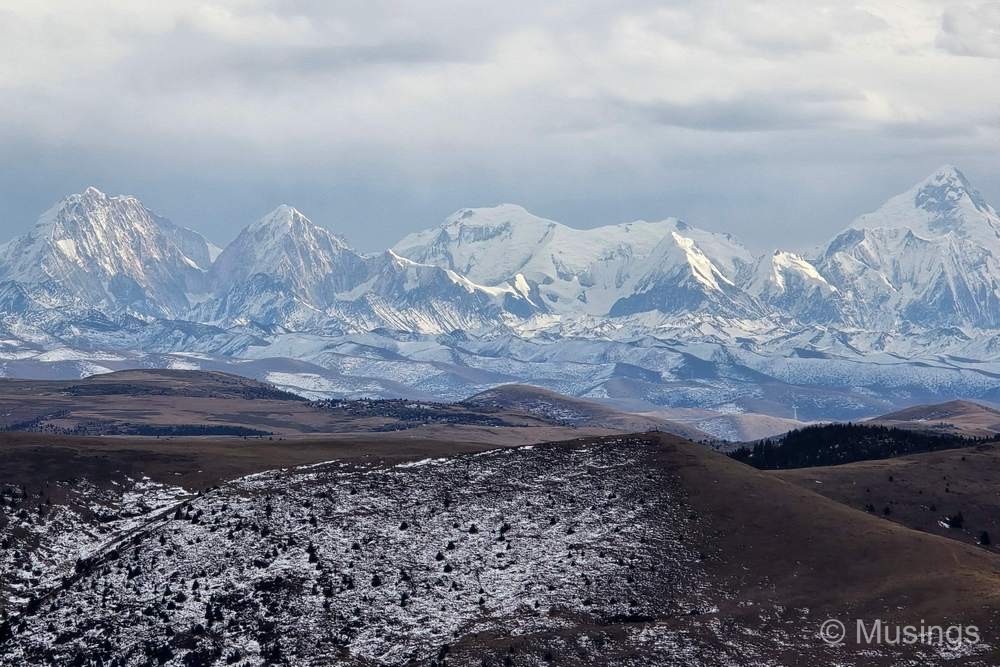
As we were spending the first 14 days at altitudes of 3,000m and above, we were quite anxious prior to the trip about possible effects of altitude sickness. We talked to the agent who assured us that most people would be able to adjust, read up further abot it, and decided to get our local GP to prescribe altitude sickness meds for everyone of us. The local meds weren’t expensive, and our GP prescribed enough for each of us and for a week. On day 04 when we visited Jade Dragon Snow Mountain, our guide brought us to the local shop, and we ended up spending a fair bit for herbal remedies and O2 cannisters. As it turned out, our use of these were minimum. Only the wife suffered from some effects – generally lethargy and a persistent headache at altitudes that exceeded 3,500m – while the kids and myself were largely OK without herbal remedies and meds from Singapore, and needed only the occasional supplement O2. We misplaced our herbal remedies – either left in a vehicle when we changed vehicles, or in our hotel at Shangri-La – and had to discard 10 of 16 O2 cannisters when at Chengdu East Railway Station [they do not permit O2 cannisters to be brought onboard trains]. Quite a waste! So, very important takeaway: go with local meds, buy the bare minimum O2 cannisters as these are widely available everywhere, and forget about the herbal remedies.
The UV radiation we got blasted with at altitudes was a serious thing. The kids and missus basically came out OK, as they applied a lot of sunblock and ensured that that they were completely covered up – including forearms and hands – whenever we were up at altitudes. It was tougher for me as trying to use the drone’s RC with gloves on is tough. So, on two occasions at Blue Moon Valley and Balagezong, I took my gloves of so that I could more gently control the drone with the RC’s joysticks. Bad mistake: my hands and forearms got badly razed with just 10-15 minutes of exposure each time. All those Mt. Everest climbers in documentaries I’ve seen with intense skin burnt: I’ve now additional new found respect having now experienced likely just a fraction of what they likely have gone through.
Very few people use cash in China: everyone uses payment apps. including Alipay and WePay. We were aware of this trend but didn’t expect it to be this pervasive: in Xinduqiao one evening, a lady even approached us on the street begging for donations, and she showed us her Alipay QR-code for us to just directly transfer money. And the roadside vendor selling us freshly farmed strawberries on day 02: that fellow also asked us to use Alipay too. We’d brought along a fair bit of Chinese RMB thinking that since we were traipsing in the less developed parts of the country, there would be locals who wanted us to pay using cash: we found none. And many locals seemed reluctant to even accept cash, so much so that the only uses for the stash of 100RMB notes we had on hand was to use it to pay our driver and tour guide tips every evening, and we had to bring home 90% of the RMB notes that we’d brought into the country. So, next trip; we’re just going to bring the bare minimum. That said, we had difficulties with WePay when in China, despite our belief that everything had already been setup properly back home already. Alipay when configured worked very well, but we our bank cards routinely resist payment transactions on WePay, and we invariably ended up having to use Alipay almost all of the time.
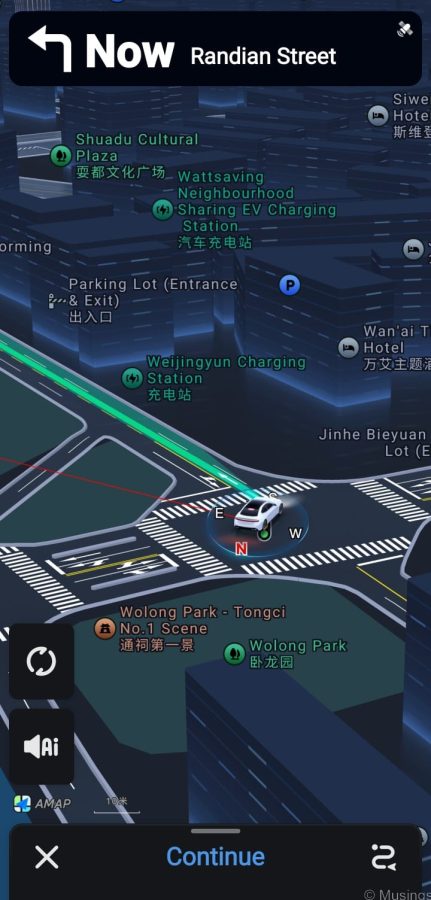
We also brought along roaming data sims for the various phones and tablets we had. Thing is: all of us are so used to Google services and YouTube that it was really tough trying to limit our usage of these technologies for so long a period. The wife wanted to continue watching her news on YouTube, the daughter gaming videos on the same, and myself – posting those 4K drone videos to Facebook. All these activities consume a lot of data. In fact, the daily data caps on each SIM card became something that we had to grapple with. I’d thought that 1GB/day for myself and 500GB/day for the rest of the family would suffice: turned out that we probably each needed twice more than that. So, point to note in future trips!
Interestingly, throughout this trip and the many casual conversations we had with drivers, guides, salespeople, waiters etc. there was never a time where a controversial topic seeped in. Perhaps the locals are guarded against talking about politics to foreigners. To be fair, we keep our opinions about geo-politics to ourselves anyway, but I’d been mentally prepared to at least hear someone’s opinions about Taiwan, or Trump. But the only geopolitical topic that ever came up – and it was once, and fleetingly – was the current tension between China and Japan, and how it has affected one particular local industry, and the opinion was that of regret. Instead, the locals instead chatted with us about very familiar things: including weather, the many interesting types of food, and – of course – children, amd education, two topics that Singaporeans with kids loved to talk about!
I was also surprised that there I saw very few Caucasian/ang mo foreigners throughout the entire trip. Maybe it’s an issue of where we largely were, but that would only apply to Yunnan and Shangri-La. Chengdu is a pretty cosmopolitan city, but even there, I practically saw zero white folks. I observed that to my ang mo bud, and he quipped that they were probably all in Kyoto. Haha.
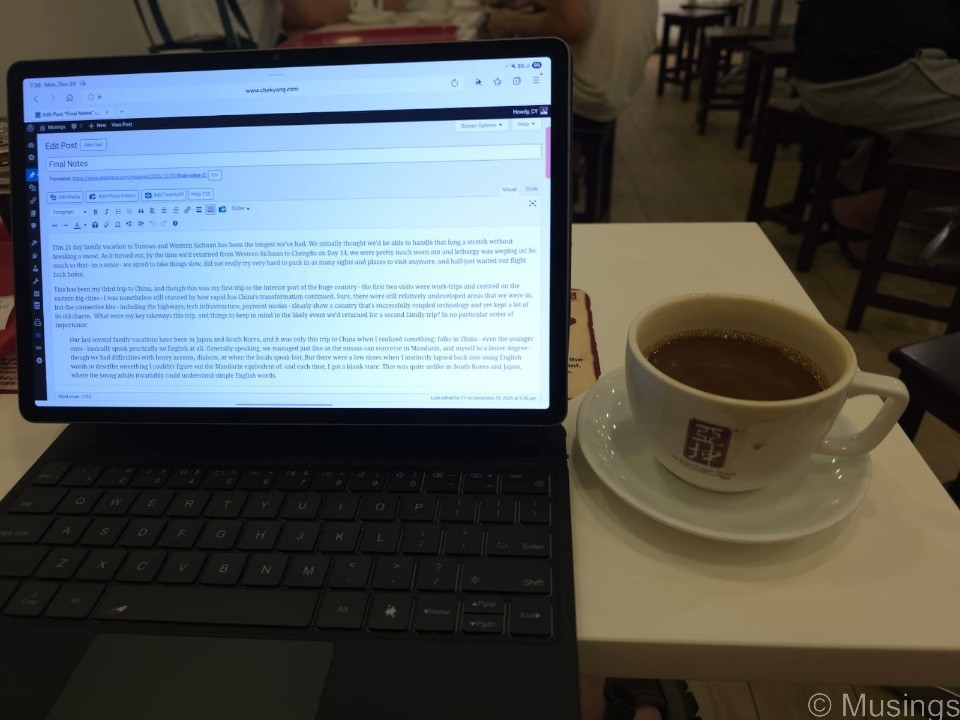
In all, we really enjoyed this trip: the locals were friendly, things were generally affordable [though we paid a pile of money to our local tour operator to arrange almost everything in the first 14 days!], and the natural and landscape scenes awesome. I think the daughter still prefers South Korea on account of K-culture. But from at least a scenery perspective, there is really no contest: between South Korea, Japan, and China, the latter simply offers much more dramatic natural environments. The wife is particularly also interested for a return trip, especially now that she’s overcome her initial hesitations about touring China, so we’d be seriously looking into a 2026 trip again to the country!