Sep 01

Hannah should be eating lumpy foods now as 1) she has more teeth and 2) chewing helps (indirectly) in speech.

Just the other day, I made cream of mushroom soup for our dinner and used some of the soup to mix with steamed rice for her too. I’m glad she took to the taste of mushrooms positively as both Yang and I love mushrooms. :)

Okay, dinner tonight. I heated up 100 ml of frozen, homemade tomato sauce and added minced beef. At the same time, I had a small bowl of rice steaming in another pot. The whole process of preparation and cooking took no more than 30 minutes.

Beef-in-Tomato-Sauce-Cooking

Once the minced beef tomato sauce was ready, it was poured over the steamed rice (I added more water to get very moist rice). Just before feeding Hannah, the rice is mixed thoroughly with the sauce.

Beef-in-Tomato-Sauce-over-Steamed-Rice-upload

She enjoyed it :) Yay.

No Comments »
Aug 06

Since Hannah came into our lives, I have been doing a lot of grocery shopping just to prepare her meals. There are certain types of veggies and fruits which I would usually go for when I do marketing.

Vegetables

  • Potatoes: Brastagi Hertha (NTUC) – flavourful for making mashed potatoes (Note: Brastagi mini potatoes were really really bland)
  • Sweet potatoes: Orange ones from Australia (NTUC & CS) – they have a higher moisture content as compared to local ones
  • Carrots: Australian (NTUC) – less than $1 per pack
  • Corn on cob: Malaysia (NTUC & CS) – cheap and sweet (Note: consume corn within 3 days of purchase as its sugars will turn to starch over time)
  • Pumpkin: Zenxin’s organic Japanese variety (CS) – very sweet and moist
  • Broccoli: Australian (NTUC)
  • Cauliflower: China (NTUC & CS) – the organic ones are either too expensive or not fresh
  • Spinach: local hydroponic farm (NTUC) – no pesticides!
  • Cherry tomatoes: Sakura (NTUC) – no pesticides!
  • Garden peas: frozen big pack (NTUC house brand)

Fruits

  • Apples: US organic Red Delicious (CS) – CS doesn’t carry it anymore :(
  • Pears: as long as it looks and smells sweet :) (NTUC & CS)
  • Oranges: Australian Navel (Citrus brand is very sweet when in season) (NTUC) – 1 year old onwards
  • Strawberries: Organic ones, seasonal (NTUC) – 1 year old onwards
  • Golden Kiwi: New Zealand (NTUC) – these are sweet and juicy
  • Banana: (NTUC & CS)
  • Watermelon: (NTUC, CS or parents’)
  • Rock melon: Australian (NTUC)
  • Hami melon: China (NTUC)
  • Mangoes: Thai yellow honey mangoes (NTUC)
  • Papaya: any variety as long as it is sweet :D

Meats

  • Fish: salmon, threadfin & cod (NTUC & CS)
  • Beef: tenderloin & minced (parents’, NTUC & CS)
  • Chicken breast: NTUC
  • Pork: fillet minced (NTUC & CS)

Dairy Products

  • UHT Fresh Milk: Marigold Plain (it has vitamin D added to its NZ fresh milk to help in absorption of calcium) (NTUC usually have discounts)
  • Cheese: Laughing Cow Plain party cubes (NTUC)
  • Yoghurt: Pauls original (NTUC) – the only plain version with the simplest, workable ingredients (includes live probiotic cultures)
  • Mamil Gold Milk Powder for 1-3 years (NTUC)
  • Eggs: Sakura Eggs (the yolks are very tasty!)
  • Tofu: Organic silken tofu (NTUC & CS)

I have yet introduce pasta in tomato sauce to Hannah. It is long overdue. Sigh, I must get down to it someday! :)

7 Comments »
Aug 04

Ya, yet another porridge recipe! :D

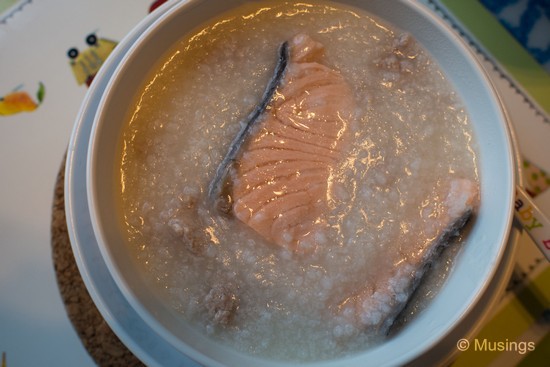
The reason for posting this recipe here is because I discovered a nice addition to the usual fish porridge ingredients. It is tofu. Besides the usual slice of ginger, the fishy odor is less strong in the presence of tofu. Personally, I felt that it gave the dish a balance of flavours.

Threadfin (wu yu), as many locals are aware, is a popular fish used in baby foods due to its few bones. It is also not cheap. To buy it fresh, skip your neighborhood supermarkets for the wet markets’ fare.

blog-2010-rivervale-toufu-porridge

Okies, here’s the recipe:

Ingredients

  • brown rice grains (1 Chinese soup spoon)
  • hot water (250 ml or 1 Chinese rice bowl)
  • threadfin (small, thick slice of fillet, minced with knife)
  • carrot (1 stick, peeled and chopped into chunks)
  • ginger (1 slice)
  • silken organic tofu (1 small block: 2" cube, cut into tiny cubes)

Method

1)  Add washed brown rice grains, ginger, carrots and hot water into the slow cooker and cook on ‘high’ for 2 – 2.5 hr.

2) Once the porridge is cooked, remove all the carrot pieces and mash 2 of the carrot chunks in the serving bowl. Set it aside for later use.

3) Add threadfin and tofu and stir for a few seconds.

4) Cover for a minute, then remove the slice of ginger and scoop out the porridge into the bowl with mashed carrots. Stir to mix all the ingredients well before feeding :)

2 Comments »
Jul 25

It’s the weekend again! That means I have more time to do cooking at home :D I decided to give tom yum soup a shot after getting inspired by another local blogger.

So it was to NTUC to shop for all the necessary ingredients this morning. I enjoy buying fresh produce… :D The sight of fresh vegetables and fruits makes me happy. :)

I bought the Dancing Chef’s Tom Yum paste. I supposed any brand will do as long as you have chili and lime on hand to adjust the spiciness and sourness according to personal preference. :) It’s quite a simple dish to prepare and cook. Just follow the instructions on the package, especially the ratio of paste to water. Always add seafood last as they cook quickly. I added coconut milk for a change. :)

blog-2010-cooking-DSC_2450-tomyam

Ingredients

  • Tom Yum paste (Dancing Chef: 100g)
  • Water (according to the paste package, it was 400 ml)
  • Coconut milk (200 ml)
  • Prawns (8 big ones, shelled and deveined)
  • Fish fillet (any white fish will do, about 200 g, sliced)
  • Button Mushrooms (1 box ~25og, cut in quarters)
  • French beans (5 stalks, sliced into 1-inch pieces)
  • Lemon grass (1 stalk, remove outer 2 leaves, wash, chop off the 2 ends, slice only the bulb section, the green portion reserved to be thrown into the soup with the slices)’
  • Chili padi (1 – cut into slices with a pair of scissors)
  • Lime (1 – cut into halves)
  • Mint leaves (garnishing – optional)

Additional ingredient: Carrots (2 medium sticks, peeled and sliced) – I added this root veggie as we have a big ‘bunny’ at home “P

Method

1) Boil a pot containing the paste + 400 ml water + lemon grass + carrots (optional).

2) Once the water has boiled, simmer in medium heat for the carrots to soften partially – about 10 minutes.

3) Add French beans and mushrooms and simmer for another 10 minutes.

4) Taste the soup. Add chili padi and / or lime juice if desired. A bit of lime juice gives a refreshing taste to the soup. :)

5) Add coconut milk, stir well and bring the soup to a boil.

6) Add fish slices and prawns just before the soup starts boiling.

7) Once the soup starts boiling, turn off the flame, add mint leaves for garnishing and serve immediately with steamed, white rice.

If you’d prefer to omit the coconut milk, skip step 5. :)

I liked the unique taste of coconut milk in tom yum flavor but Yang found it strange. Anyway, as long as there are carrots in any dish, he can be satisfied. :)

No Comments »
Jul 24

I felt like Linguini in Ratatouille when trying to cook Hannah’s and our dinner simultaneously tonight. The last thing I wanted was a messy kitchen with injuries and broken porcelain wares.

I was browsing through the Internet for easy recipes again and chanced upon this Japanese dish Nikujaga. It is said to be a comfort food for the Japanese. The dish is essentially a vegetable stew with some meat in it. It is a sweet, savoury kind of food which goes down well with many people. Here’s the recipe:

 blog-2010-cooking-DSC_2424-japanese-beef

Ingredients

  • 200g lean pork or beef, slice or cut into chunks (we used more meat as this is the only dish for dinner)
  • 1 white onion, cut into wedges
  • 3 large carrots, cut into large chunks (because Yang loves carrots)
  • 1 potato, cut into chunks (original recipe calls for more potatoes than carrots)
  • 1 Chinese bowl (250 ml) dashi stock / chicken stock / water
  • 2 tbsp mirin
  • 2 tbsp sugar
  • 4 tbsp light soy sauce (adjust according to one’s preference. I used Kikkoman premium blend)
  • 1 tbsp ginger juice (squeezed from freshly grated ginger)

Method

1. Heat up some oil in a medium-sized metal pot. Brown the meat.

2. Add vegetables, and saute for 3-5 mins.

3. Add stock and the rest of the seasonings. Stir well.

4. Leave the pot uncovered and allow everything to simmer in medium heat for about 30-40 mins, or until the meat is tender and the hardy vegetables are softened sufficiently. The gravy should be reduced to a mere thin layer which is thick and full of flavour.

The verdict? Oishi! :P

No Comments »
Jul 23

Hannah’s supply of pumpkin comes from Cold Storage’s organic fresh food section. This is a regular item on the shelf. It is of a Japanese variety and hence its sweetness is guaranteed.

Pumpkin is one of the easiest veggy to puree. It can be easily mashed with a spoon after cooking. I like to puree it with garden peas and chicken breast meat. No water is needed. The preparation is really simple: chop the pumpkin into small cubes and steam them together with garden peas for 15 minutes. Boil chicken meat for 10 minutes. Mash the veggies and shred the chicken into tiny bits. Mix the veggies with the meat and stir well. Serve warm :)

blog-pumpkin

5 Comments »
Jul 20

Sweet potato goes well with spinach and/or egg yolk. For babies who reject the taste of spinach, it can be masked in the presence of sweet potato. I usually prepare sweet potato puree with either peas + spinach or peas + egg yolk. It is a nutritious combo for lunch or dinner. I try to use the orange flesh variety where possible due to its higher content of beta-carotene and vitamin C. Some sweet potatoes have a higher moisture content than others and hence the resultant puree is not so dry. I discovered that adding a bit of cauliflower boost the moisture content of sweet potato puree.

Preparation and cooking the puree are both easy:

1) Peel and chop a small sweet potato into small chunks.

2) Roll a few spinach leaves together and cut into pieces. (too much spinach can make the resultant puree bitter)

3) Place the sweet potato, spinach leaves and peas into a plate and steam for 15 minutes.

4) Puree the veggies. (I have a metal sieve kinda set for mashing up veggies for babies. The skin of peas is left behind on the sieve.)

5) Mix the puree evenly and place it in a hot water bath to keep it warm while feeding the baby.

The photograph below is an updated version of the sweet potato puree as I’m getting Hannah to chew more. Since she has turned one, it is quite safe to consume egg white now. Hence, I’ve included both the egg yolk and egg white in the recipe. I left out the spinach in the recipe for this one.

sweet-potato-with-sweet-peas-and-chopped-egg-website

Sweet Potato Puree with Egg & Peas

2 Comments »
Jul 18

Hannah has better food while at her nanny’s place. Her nanny is a Cantonese and as many of us know, this dialect group is particular about their soup. Every meal must have a soup dish.

I just got a recipe from the nanny for a watercress soup which she offered me when I picked Hannah up from work last Friday. Wow, it was the best watercress soup I have ever tasted!  The nanny told me that the recipe was passed down from her parents. BTW, she’d always cook a big pot of soup every morning and use some as stock base for Hannah’s porridge.

I was eager to try out the recipe at home and so bought all the necessary ingredients at NTUC this morning. The easy thing about doing soup is that it is usually not labour-intensive. Hence, I was able to multi-task; I cooked Hannah’s and our dinner at the same time. Below is the recipe for those who are interested.

watercress

Ingredients:

Watercress – 1 packet (soak in salt water and rinse – this would help to remove slugs & worms)

Pork ribs – 200 g (I used loin ribs)

Pork soft bones – 200-300 g (the bulk of it is lean meat, cut into bite-size cubes)

carrot – 1 large, peeled and chopped into big chunks

red dates – 10 pitted ones (soak and rinse)

honey dates – 1 (soak and rinse)

dried figs – 5

nan xing bei xing – 1 tbsp

water – 1.2 L

salt – a dash

light soy sauce – according to taste, 1 or 2 tsps

Method:

1) Boil 1.2 L of water in a medium-sized pot.

2) In the meanwhile, blanch the pork ribs and soft bones in boiling water for a few seconds. Pour the liquid away to remove the scum and smell. If necessary, rinse with water to wash away the scum.

3) Once the pot of water comes to a rolling boil, add all the ingredients except for the salt and soy sauce. Let the water boil again for 10-15 minutes. Uncover the pot all this while.

4) Cover the pot and bring the soup to a mere simmer by lowering the gas to the minimum. You should only see very little or hardly any bubbling in the soup. Simmer for 1 hour.

5) Add a dash of salt and light soy sauce and stir well just before serving.

6) Serve with steamed rice . If desired, prepare a small dish of freshly cut chilli padi and finely chopped garlic in premium light soy sauce for dipping the pork meat.

I’m finally trying to go back to home-cooking since Hannah was born a year ago! :)

No Comments »
Jun 23

I was eager to let Hannah try something Japanese as well. It was seaweed for starters. I bought nori seaweed (unsalted) as garnishing for her porridge.

Nori seaweed, according to Wikipedia, is a good source of many nutrients. It contains vitamin A, B, C1, iodine, protein , fiber and carotene. It also contains a great deal of calcium and iron.

Seaweed-on-chicken-porridge-for-uploading

It was well received by Hannah. She enjoys eating it on its own or with porridge. :)

2 Comments »
Jun 23

This is a quick and easy dish to prepare but requires skill to perfect it. After reading up a bit from various websites on the know-how, it took me 2 attempts to get it right. My first attempt resulted in too watery custard egg.

Ingredients

2 large eggs (I used Sakura eggs)

200 ml home-made chicken stock

80 ml fresh milk (I used Marigold UHT Fresh Milk)

3 tsps mirin

A dash of white ground pepper

1 round tbsp of minced pork

Method

1) Beat the eggs thoroughly and add the rest of the ingredients (except the meat). Stir well.

2) Pass the egg mixture through a strainer into another bowl for steaming. This step is to create a smooth texture in the final product.

3) Add the minced pork and stir gently to avoid air bubbles from forming.

4) Steam for about 10 minutes using medium heat.

5) Spoon out the hot custard egg in smaller portions into a baby bowl to cool it down before feeding.

steamed-custard-egg-steaming-for-uploading

The recipe here can serve 2 babies. Suitable for twins. Otherwise, mommy could enjoy the reminder for lunch/dinner :) Since whole eggs are used here, the recipe is recommended for babies of 12 months and above.

No Comments »
preload preload preload